
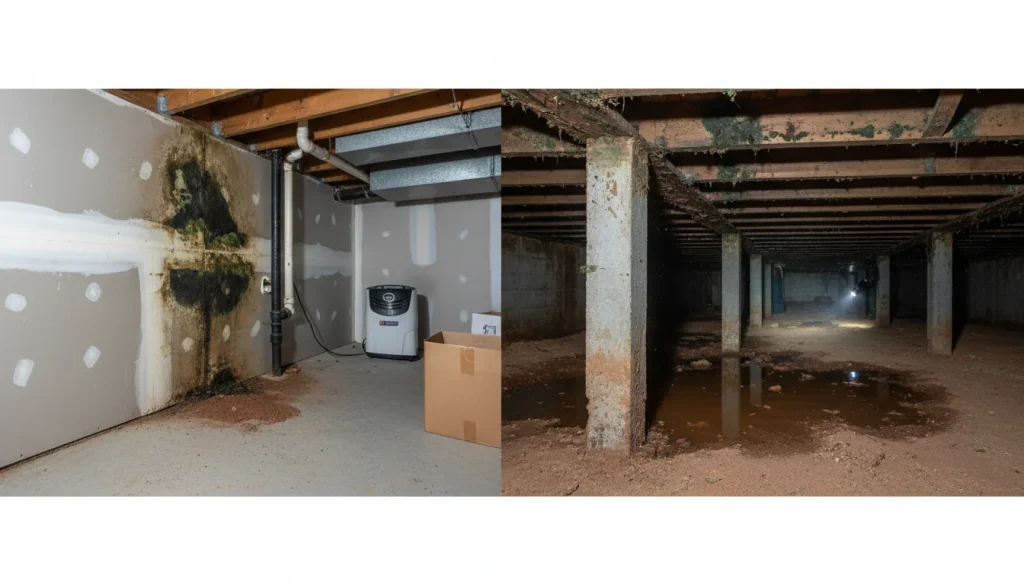
Why Basement and Crawl Space Mold Is Common in Jacksonville Homes
Jacksonville’s humid subtropical climate with frequent rainfall and high groundwater levels creates perfect conditions for basement and crawl space mold growth in local homes. The combination of moisture seepage through concrete foundations poor ventilation and organic materials like wooden floor joists allows mold colonies to establish quickly often before homeowners notice musty odors or visible spots. Jacksonville Mold Removal has helped hundreds of local families address these hidden problems that can affect indoor air quality and structural integrity if left untreated.
Understanding the Local Climate Factors Contributing to Mold
Jacksonville experiences average humidity levels between 70-90% throughout much of the year especially during the summer months and hurricane season. This persistent moisture combines with the region’s high water table making basements and crawl spaces particularly vulnerable. Homes in Downtown Jacksonville and historic neighborhoods often have older foundations that are more susceptible to water intrusion while properties near the St. Johns River face additional risks from flooding.
The wet soil conditions common in Northeast Florida allow water to wick up through concrete slabs and foundation walls. Even newly constructed homes can develop issues if builders did not properly install vapor barriers or adequate drainage systems. Understanding these local environmental factors helps homeowners take proactive steps rather than simply reacting to problems after they appear.
Identifying Signs of Basement and Crawl Space Mold
Early detection is crucial when dealing with basement and crawl space mold. Musty earthy odors are often the first indicator especially when entering these areas. Visible growth may appear as black green or white patches on walls floor joists or insulation materials. Other warning signs include peeling paint efflorescence on concrete surfaces warped wood and increased allergy symptoms among household members.
In crawl spaces you might notice sagging insulation discolored wooden beams or excessive condensation on ductwork. Basement mold often manifests along baseboards near windows or behind stored items where air circulation is poor. Professional inspection becomes essential when these signs appear as many mold types grow behind walls or under flooring where they remain hidden from casual observation.
Health Risks Associated with Crawl Space and Basement Mold
Exposure to mold in these areas can trigger various health concerns particularly for children elderly individuals and those with respiratory conditions. Common symptoms include nasal congestion coughing wheezing skin irritation and eye inflammation. Certain mold species produce mycotoxins that may cause more severe reactions when inhaled over extended periods.
Because basements and crawl spaces connect to the rest of the home through HVAC systems and floor penetrations mold spores can circulate throughout living areas. This makes professional whole-house mold assessment important for determining the full extent of contamination and potential health impacts.
Common Causes of Mold in Jacksonville Properties
Several factors contribute to mold development in local basements and crawl spaces. Poor grading around foundations directs water toward rather than away from the structure. Inadequate or clogged gutters cause overflow that saturates soil near the foundation. Many older Jacksonville homes lack proper vapor barriers beneath crawl spaces allowing moist soil to release humidity into the enclosed area.
Leaking pipes condensation from uninsulated ductwork and poor ventilation further compound these issues. During heavy rains common in our region sump pumps may fail or French drains can become overwhelmed leading to standing water. Each of these problems creates the damp dark environment where mold thrives on organic building materials.
Why DIY Mold Removal Often Falls Short
Many homeowners attempt to address basement and crawl space mold using store-bought cleaners and basic protective equipment. While these methods may remove surface growth they rarely address underlying moisture sources or hidden colonies. Without proper containment procedures DIY efforts can actually spread spores throughout the home and into living spaces.
Professional mold remediation involves detailed assessment moisture control specialized cleaning techniques and post-remediation verification. Jacksonville’s unique environmental conditions require specific approaches that account for our high humidity levels and soil characteristics. Attempting complex remediation without proper training and equipment often leads to recurring problems and potential health risks.
Professional Mold Assessment and Inspection Process
Effective remediation begins with thorough inspection using moisture meters thermal imaging cameras and air sampling equipment. Certified technicians examine all accessible areas of the basement or crawl space documenting the extent of mold growth and identifying moisture sources. This detailed assessment helps create a targeted remediation plan specific to each property’s unique conditions.
During inspection professionals also check for structural damage to wooden components that may require repair or replacement. Understanding the full scope of the problem prevents unexpected complications during the removal process and ensures all contaminated materials receive proper treatment.
Effective Mold Remediation Techniques for Below-Grade Spaces
Professional basement and crawl space mold removal involves several specialized steps. First technicians establish containment using plastic sheeting and negative air pressure to prevent spore migration. They then remove heavily contaminated materials such as insulation and severely damaged wood for proper disposal.
Remaining surfaces receive HEPA vacuuming and antimicrobial treatments designed to kill mold at the microscopic level. In crawl spaces installing proper vapor barriers and improving ventilation often forms a critical part of the solution. Basement remediation may include waterproofing measures and dehumidification systems to maintain moisture levels below 60% preventing future growth.
For bedrooms located above crawl spaces specialized approaches ensure contaminants do not migrate upward. Our bedroom mold remediation techniques address these specific concerns while maintaining the integrity of living spaces.
Preventing Future Mold Growth in Basements and Crawl Spaces
Prevention requires addressing both moisture control and ongoing maintenance. Installing or upgrading sump pumps French drains and exterior grading helps redirect water away from foundations. In crawl spaces adding vapor barriers improving cross-ventilation and using dehumidifiers creates conditions less favorable to mold development.
Regular inspections allow early detection of potential problems. Homeowners should check for signs of moisture after heavy rains and ensure gutters downspouts and drainage systems function properly. Controlling indoor humidity throughout the home also reduces condensation issues in below-grade areas.
Educating yourself about these preventive measures makes a significant difference. Our Mold Education Workshop for Homeowners provides valuable information about maintaining healthy indoor environments in Jacksonville’s challenging climate.
Special Considerations for Historic Jacksonville Homes
Many properties in Riverside and other historic districts feature unique construction elements that complicate mold remediation. Older foundations different building materials and architectural details require specialized approaches that preserve historic integrity while effectively addressing mold issues.
These homes often have crawl spaces with limited access and ventilation making professional assessment particularly important. The combination of age-related settling and Jacksonville’s humid conditions creates environments where mold can flourish in hard-to-reach areas. Working with technicians experienced in historic properties ensures appropriate techniques that respect the home’s character.
The Importance of Proper Ventilation and Moisture Control
Adequate ventilation plays a crucial role in preventing basement and crawl space mold. In crawl spaces properly sized vents allow air circulation that reduces humidity levels. However in some cases mechanical ventilation or dehumidification systems prove more effective particularly in Jacksonville’s humid environment.
Basements benefit from exhaust fans and dehumidifiers that maintain relative humidity below 60%. Proper insulation of pipes and ductwork prevents condensation that contributes to moisture problems. Understanding the science behind these solutions helps homeowners make informed decisions about improving their property’s defenses against mold growth.
Long-Term Effects of Untreated Mold on Home Structure
When left unaddressed mold can cause significant structural damage over time. Wooden floor joists beams and subflooring begin to rot as fungi break down cellulose materials. This deterioration may eventually lead to sagging floors or even structural failure in severe cases.
Additionally mold growth can damage insulation reducing energy efficiency and increasing utility costs. In basements it may affect concrete and masonry causing spalling and weakening of foundation walls. The financial implications of extensive damage often far exceed the cost of professional remediation performed at the first signs of trouble.
Selecting the Right Mold Removal Service in Jacksonville
When choosing a professional service look for companies with specific experience addressing basement and crawl space issues in Northeast Florida. Certification from recognized industry organizations demonstrates commitment to proper techniques and safety standards. Local knowledge of Jacksonville’s unique environmental conditions ensures appropriate solutions rather than generic approaches.
Request references review detailed remediation protocols and ensure the company provides comprehensive post-remediation testing. The best providers offer transparent communication throughout the process explaining each step and answering questions clearly. They focus on both immediate removal and long-term prevention tailored to local conditions.
Understanding the Mold Remediation Process Step by Step
Professional remediation follows established protocols designed to safely and effectively eliminate mold while preventing cross-contamination. The process typically begins with detailed documentation of existing conditions followed by containment setup. Air filtration systems run continuously during remediation to capture airborne particles.
Technicians remove contaminated materials using proper personal protective equipment and specialized tools. Antimicrobial treatments address remaining microscopic organisms while addressing the moisture source prevents recurrence. Final cleaning with HEPA filtration systems removes any residual spores before independent testing verifies successful remediation.
This methodical approach differs significantly from surface cleaning and ensures lasting results even in challenging environments like Jacksonville basements and crawl spaces.
Cost Factors for Basement and Crawl Space Mold Remediation
Several variables influence the cost of professional mold removal. The size of the affected area extent of contamination accessibility of the space and necessary repairs all factor into pricing. Properties requiring extensive waterproofing or structural repairs typically involve higher investment though addressing problems early minimizes these costs.
While exact figures vary by situation professional remediation often proves more economical than repeated DIY attempts or dealing with extensive damage from neglected mold growth. Many homeowners find that the improved air quality energy efficiency and peace of mind justify the investment in professional services.
Seasonal Considerations for Jacksonville Homeowners
Certain times of year present heightened risks for basement and crawl space mold development. Hurricane season brings heavy rainfall that can overwhelm drainage systems while summer humidity creates persistent damp conditions. Winter months may seem less risky but indoor heating can drive moisture into cooler below-grade areas where it condenses.
Preparing before seasonal changes helps minimize problems. Checking drainage systems cleaning gutters and inspecting for early signs of moisture should become part of routine home maintenance. Understanding these patterns allows proactive rather than reactive approaches to mold prevention.
Maintaining a Mold-Free Environment After Remediation
Successful remediation requires ongoing vigilance to prevent recurrence. Regular monitoring of humidity levels in basements and crawl spaces helps identify potential issues before mold returns. Maintaining proper functioning of dehumidifiers sump pumps and ventilation systems remains essential.
Periodic professional inspections can catch small problems before they escalate. Homeowners should address any new water intrusion promptly and maintain exterior drainage features. With proper attention the investment in professional remediation provides lasting protection against the damaging effects of mold in Jacksonville homes.
By understanding the unique challenges posed by our local environment and taking appropriate preventive measures homeowners can protect both their family’s health and their property investment from the effects of basement and crawl space mold.
Leave a Reply