
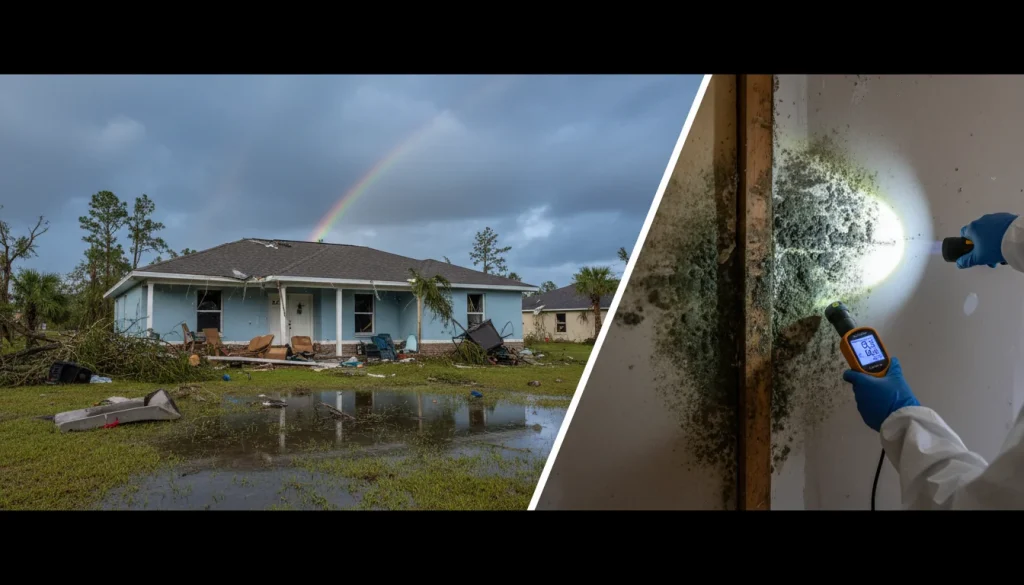
Immediate Mold Risks After Jacksonville Storms
When hurricanes and tropical storms slam into Jacksonville the heavy rains and flooding create perfect conditions for mold growth. Within 24 to 48 hours after floodwaters recede mold can begin colonizing damp materials in homes across Duval County. Jacksonville Mold Removal has responded to hundreds of storm-related mold cases and the pattern is always the same: unchecked moisture leads to rapid fungal growth that can affect air quality and structural integrity.
Florida’s subtropical climate makes mold risks after Jacksonville hurricanes especially severe. High humidity levels that rarely drop below 60 percent combine with storm damage to accelerate mold colonies. Whether your home took on inches of water from a storm surge or simply suffered from prolonged roof leaks the resulting dampness creates an environment where mold thrives. Understanding these risks is the first step toward protecting your family and property.
How Hurricanes Create Mold Problems in Jacksonville Homes
Jacksonville’s unique geography makes it particularly vulnerable to water intrusion during severe weather. Sitting at the mouth of the St. Johns River the city faces threats from both coastal flooding and river overflow. When Hurricane Ian or similar systems bring torrential rains homes in neighborhoods like Riverside Avondale and San Marco often experience water entering through compromised roofs windows and foundations.
The water damage itself is only the beginning. As floodwaters recede they leave behind moisture trapped in drywall insulation carpeting and wooden structures. This residual dampness combined with Jacksonville’s warm temperatures creates ideal conditions for various mold species. Stachybotrys chartarum (black mold) Aspergillus and Penicillium are commonly found in water-damaged Jacksonville homes.
Beyond visible flooding hurricanes often damage HVAC systems allowing moisture to circulate throughout ductwork. This can spread mold spores to every room in your house. Many homeowners are unaware that their central air system may be distributing microscopic mold particles until family members begin experiencing respiratory issues.
Health Concerns Related to Post-Storm Mold Exposure
Mold exposure after storms presents significant health risks particularly for vulnerable populations. Children elderly individuals and those with compromised immune systems face greater dangers from mold toxins. Common symptoms include persistent coughing wheezing sinus congestion skin irritation and eye redness. In Jacksonville’s humid climate these symptoms can persist for months without proper intervention.
More serious complications can develop with prolonged exposure. Some residents report chronic fatigue headaches and difficulty concentrating after living in mold-contaminated homes. Those with asthma or allergies often experience severe exacerbations requiring medical attention. Jacksonville Mold Removal technicians frequently hear from clients who only connected their health issues to mold after professional testing confirmed elevated spore levels.
The hidden nature of much post-storm mold makes it especially dangerous. Growth behind walls in attics and under flooring can release spores into the air without any visible signs. This underscores the importance of professional assessment rather than relying solely on what you can see.
Identifying Mold After Heavy Rains in Jacksonville
Early identification is crucial when dealing with mold risks after Jacksonville hurricanes. Musty odors are often the first indicator of hidden mold growth. Discolored patches on walls or ceilings particularly in varying shades of green brown or black warrant immediate attention. However not all mold presents with obvious visual cues.
Water damage signs like bulging drywall peeling paint and warped flooring often accompany mold growth. Pay special attention to areas that remain damp longest after storms including basements crawl spaces and bathrooms. Even if you don’t see mold these areas may harbor extensive colonies.
Our Infrared Camera Mold Detection service helps identify moisture behind surfaces that appear dry to the naked eye. This technology is particularly valuable after hurricanes when water may have infiltrated areas not immediately apparent to homeowners.
Why Professional Mold Removal Is Essential After Storms
DIY cleaning after major water events often fails to address the full extent of mold contamination. Bleach and household cleaners may kill surface mold but they cannot penetrate porous materials where roots extend deep. Additionally disturbing mold without proper containment can spread spores throughout your home making the problem worse.
Jacksonville Mold Removal follows IICRC S520 standards for mold remediation ensuring complete removal rather than temporary treatment. Our process includes containment of affected areas air filtration removal of damaged materials cleaning of salvageable items and application of antimicrobial treatments. This comprehensive approach prevents recurrence which is common when only surface cleaning is performed.
After severe storms insurance claims for mold remediation require detailed documentation. Professional services provide the necessary reports testing results and remediation protocols that satisfy insurance requirements. Attempting to handle extensive mold growth without professional documentation may result in denied claims.
Preventing Mold Growth After Jacksonville Flooding
Swift action after storms can significantly reduce mold risks. Begin by removing standing water using pumps and wet vacuums. Extract water from carpets and padding whenever possible as these materials dry slowly and often require replacement. Increase ventilation by opening windows and using fans but only after outdoor humidity levels drop below indoor levels.
Dehumidifiers are essential tools in post-storm recovery. Jacksonville’s ambient humidity often exceeds 70 percent making natural drying nearly impossible. Industrial-grade dehumidifiers can reduce moisture levels to below 50 percent relative humidity which inhibits mold growth. Monitor progress with a quality hygrometer.
Consider professional Whole-House Mold Assessment services following any significant water event. These comprehensive inspections identify hidden moisture sources and developing mold colonies before they become major problems. Early intervention saves both time and money compared to addressing advanced contamination.
Special Considerations for HVAC Systems After Hurricanes
Many Jacksonville homeowners underestimate the role their HVAC system plays in post-storm mold issues. When floodwaters or high humidity affect ductwork mold can colonize inside the system and spread throughout the home each time the air conditioner runs. Musty smells when the HVAC activates often indicate duct contamination.
Professional HVAC Duct Mold Cleaning becomes necessary when systems have been exposed to excessive moisture. Simply changing filters is insufficient as mold can grow on coil surfaces and within duct lining. Specialized equipment and techniques are required to thoroughly clean and sanitize these components.
After major storms HVAC technicians should inspect and clean condensation drains that may have become clogged with debris. Standing water in drain pans provides another breeding ground for mold that can then be distributed through the entire house.
Common Areas Affected by Mold After Heavy Rains
Certain areas in Jacksonville homes are particularly susceptible to mold after storms. Attics often suffer from roof damage allowing water to saturate insulation and wooden trusses. Without proper assessment and remediation this can lead to extensive mold growth that affects the entire home from above.
Bedrooms frequently harbor hidden mold due to their carpeting and extensive closet space. Clothing and fabric items can absorb moisture and support mold colonies. Our specialized Bedroom Mold Remediation addresses these sensitive living spaces with particular attention to contents and air quality.
Bathrooms kitchens and utility rooms with plumbing fixtures face increased risks when storms overwhelm drainage systems. Backups can introduce contaminated water that carries additional bacteria alongside mold. Crawl spaces and basements in older Jacksonville neighborhoods often retain moisture long after surface water has receded creating ongoing problems.
Understanding Mold Testing and Assessment
Professional mold testing provides valuable data about the types and concentrations of mold present in your home. Air sampling surface sampling and bulk material testing each serve different purposes in comprehensive assessment. Results help determine the appropriate remediation approach and verify successful cleanup.
Jacksonville’s diverse mold species require specific identification. Some types produce mycotoxins that create greater health concerns than others. Laboratory analysis identifies these differences allowing for targeted remediation strategies. Visual inspection alone cannot determine the full scope of contamination or the specific mold species involved.
Post-remediation testing confirms that spore levels have returned to normal ranges. This verification step provides peace of mind that your home is safe following professional treatment. Without this documentation many homeowners remain uncertain about the effectiveness of cleanup efforts.
Community Resources and Education in Jacksonville
Knowledge empowers Jacksonville residents to better protect their homes from mold damage. Local workshops provide valuable information about prevention identification and remediation best practices. Our Mold Education Workshop for Homeowners covers practical steps for storm preparation and post-event response.
Understanding local building codes and flood zone requirements helps homeowners make informed decisions about property improvements. Elevating HVAC equipment installing flood vents and using mold-resistant building materials can significantly reduce future risks. Jacksonville’s building department offers resources for understanding these requirements.
Community organizations provide support for residents dealing with storm damage. Connecting with others who have experienced similar challenges can provide both practical advice and emotional support during recovery. Many neighborhoods have established communication networks that activate during hurricane season to share resources and information.
Long-Term Strategies for Mold Prevention in Florida Homes
Living in Jacksonville requires ongoing vigilance against mold growth. Regular maintenance of gutters downspouts and grading ensures water flows away from your foundation rather than toward it. Annual HVAC inspections and duct cleaning prevent small issues from becoming major contamination events.
Moisture meters and humidity monitors help homeowners identify problems before mold develops. When relative humidity consistently exceeds 55 percent steps should be taken to reduce it through better ventilation dehumidification or air conditioning adjustments. Addressing minor leaks promptly prevents the extended moisture exposure that leads to mold colonies.
Landscaping choices can also impact mold risks. Avoid planting dense vegetation too close to your home’s foundation as this can trap moisture against exterior walls. Select plants that don’t require excessive watering and maintain proper spacing to promote air circulation.
Building or renovating with mold-resistant materials provides additional protection. Products like mold-resistant drywall and antimicrobial paints can slow or prevent mold growth even when moisture is present. While these materials cost more initially they often prove economical by reducing future remediation expenses.
When to Call Professional Mold Remediation Services
Not every minor moisture issue requires professional intervention. Small areas of surface mold on non-porous surfaces can sometimes be addressed with appropriate cleaners and proper safety precautions. However larger areas visible mold on porous materials or any situation involving health symptoms warrant professional assessment.
If you detect a musty odor experience unexplained health symptoms or have recently experienced flooding or leaks professional evaluation is recommended. Similarly if you’ve attempted DIY cleaning but the musty smell persists or discoloration returns experts should be consulted.
After major storms like those Jacksonville has experienced in recent years the volume of water intrusion typically exceeds what homeowners can safely or effectively manage. Professional teams have the equipment training and experience to address extensive contamination while protecting the rest of your home from cross-contamination.
Jacksonville Mold Removal provides comprehensive services tailored to the unique challenges of Florida’s climate and building styles. Our technicians understand local construction methods common water intrusion points and the specific mold species prevalent in the region. This specialized knowledge translates to more effective remediation and better long-term outcomes for your home.
Conclusion: Taking Action Against Post-Storm Mold
The period immediately following a hurricane or tropical storm represents a critical window for preventing serious mold problems. By understanding the risks acting quickly and seeking professional help when needed Jacksonville homeowners can protect their families and investments from the hidden dangers of mold growth.
While the immediate crisis of a storm passes quickly the effects of unchecked mold can linger for years. Taking proactive steps to address moisture issues and potential mold growth represents an important aspect of responsible homeownership in our storm-prone region. With proper knowledge resources and professional support Jacksonville residents can navigate the challenges of living in a beautiful but moisture-rich environment.
Leave a Reply